


Nichrome 80/20 Ribbon – High Temperature Resistance Heating Strip
Nichrome 80/20 ribbon is a premium nickel-chromium (NiCr 80/20) resistance alloy strip designed for efficient and reliable heat generation in industrial, commercial, and DIY applications; it’s also an element wire for heat seal . With a composition of approximately 80% nickel and 20% chromium, this heating ribbon offers excellent electrical resistivity, oxidation resistance, and long service life even at high temperatures.
The flat ribbon design provides greater surface contact area compared to round wire, allowing for uniform heat distribution and improved efficiency in heating applications.
- High-quality Nichrome 80/20 (NiCr 80/20)
- Temperature resistance up to ±1200°C
- Excellent oxidation and corrosion resistance
- Stable electrical resistance
- Flat ribbon for efficient heat transfer
- Long-lasting and durable
Available Sizes & Resistance
Understanding the Nichrome Ribbon Specifications
The table below provides the key electrical and physical properties of each Nichrome 80/20 ribbon size, allowing you to select the correct option for your specific heating application.
Each ribbon is defined by three important parameters:
1. Width (mm)
This refers to the flat width of the ribbon. A wider ribbon provides a larger surface area, which improves heat distribution and is ideal for applications requiring uniform heating across a surface.
2. Thickness (mm)
The thickness affects both the mechanical strength and the electrical resistance of the ribbon. Thicker ribbons generally offer lower resistance and can handle higher current loads, making them suitable for more demanding heating applications.
3. Resistance (Ω/m)
This is the most critical value for electrical design. It indicates how much resistance the ribbon provides per meter of length. Higher resistance values generate more heat over shorter lengths, while lower resistance values require longer lengths to achieve the same heating effect.
🔹 How to Choose the Right Size
- If your application requires high heat in a compact space, choose a ribbon with higher resistance (Ω/m).
- For applications needing lower heat over longer lengths, select a ribbon with lower resistance.
- Wider ribbons are better for heat sealing and surface heating, while narrower ribbons are ideal for precision or compact heating elements.
🔹 Example Application Insight
For example, a ribbon with 6.00 Ω/m will heat up faster over a short length, making it suitable for small heating elements or cutting tools. In contrast, a ribbon with 0.786 Ω/m is better suited for larger heating systems, where longer lengths are required to distribute heat evenly.
🔹 Engineering Note
By using the resistance per meter values, you can accurately calculate the required length, voltage, and current for your heating element design. This ensures optimal performance, energy efficiency, and safe operation in industrial and commercial applications.
| Width (mm) | Thickness (mm) | Resistance (Ω/m) |
|---|---|---|
| 1.27 | 0.15 | 6.00 |
| 2.00 | 0.12 | 4.94 |
| 2.38 | 0.25 | 1.88 |
| 3.17 | 0.15 | 2.29 |
| 4.00 | 0.15 | 1.90 |
| 5.00 | 0.30 | 0.786 |
Material: Nichrome 80/20 (NiCr)
Max Operating Temperature: ±1200°C
Form: Flat Ribbon / Strip
- Electric heating elements
- Industrial furnaces and kilns
- Heat sealing and packaging machines
- Hot wire foam cutters
- Electrical appliances (toasters, heaters)
- Resistor and load bank applications
Nichrome 80/20 ribbon is widely used due to its high resistivity and excellent durability under heat. The chromium content forms a protective oxide layer, ensuring long-term resistance to oxidation and corrosion.
This makes it ideal for continuous and cyclic heating applications where reliability and performance are critical.
Nichrome 80/20 ribbon is widely used across industries due to its high electrical resistivity and excellent thermal stability, making it one of the most reliable materials for heating element design. Whether used in industrial heating systems, laboratory equipment, or commercial appliances, this alloy maintains consistent performance even under prolonged high-temperature exposure.
Thanks to its low temperature coefficient of resistance, Nichrome ribbon ensures predictable and stable heating output, which is critical for precision-controlled environments. This makes it especially suitable for temperature-sensitive applications such as packaging, plastic welding, and controlled heat treatment processes.
In addition, the flat ribbon format provides improved mechanical flexibility and ease of installation, allowing it to be shaped or coiled according to specific application requirements. Compared to traditional round resistance wire, Nichrome ribbon offers better surface contact and heat transfer efficiency, reducing energy loss and improving overall system performance.
For South African industries, Nichrome 80/20 ribbon is a preferred choice in sectors such as manufacturing, food processing, mining, and engineering, where durable and efficient heating solutions are essential. Its ability to withstand oxidizing environments ensures long service life, even in demanding industrial conditions.
Whether you are designing a new heating system or replacing existing elements, Nichrome 80/20 ribbon provides a cost-effective, high-performance solution for reliable heat generation. Available in multiple sizes and resistance values, it can be tailored to meet a wide range of electrical and thermal requirements.
Heating Element Calculation Guide
To design your heating element using Nichrome 80/20 ribbon, you can use the following basic electrical formulas:
1. Power Formula (Wattage)
P = V × I
- P = Power (Watts)
- V = Voltage (Volts)
- I = Current (Amps)
2. Ohm’s Law
V = I × R
- R = Resistance (Ohms)
3. Resistance Calculation (Using Ribbon Data)
R = (Ω/m) × L
- Ω/m = Resistance per meter (from the table above)
- L = Length of ribbon (meters)
Example Calculation
If you use a ribbon with 2.29 Ω/m and a length of 2 meters:
- Total Resistance: R = 2.29 × 2 = 4.58 Ω
- Current (230V supply): I = V ÷ R = 230 ÷ 4.58 ≈ 50.2 A
- Power Output: P = V × I = 230 × 50.2 ≈ 11,546 W
Important Notes
- Always design with a safety margin to avoid overheating.
- Consider heat dissipation and airflow.
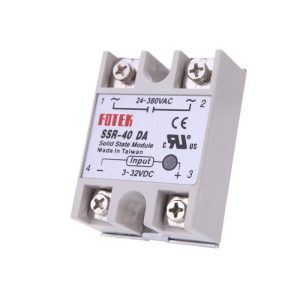
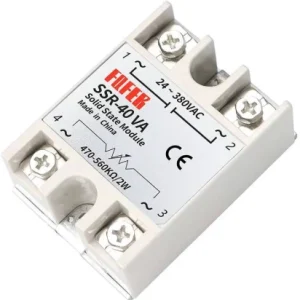
- Use appropriate insulation and temperature control (e.g., PID controller + SSR); click here to see our temperature controller and SSR set.
- Ensure your power supply and wiring can handle the calculated current.
Frequently Asked Questions
Can you assist with the design of my equipment?
Yes, we work with an engineering & design company that specializes in heating and instrumentation; click here to contact the engineering team.
Reviews
There are no reviews yet.